Skip navigation

nicklacey's avatarNick Lacey on films

La grande mort

One of the key tenets of surrealism was to annoy the bourgeoisie who have to find profound meaning in their art. To provoke annoyance the surrealists relied upon dreams as the ‘legislators of truth’. Although Cocteau was part of the surrealist movement he was often supposed to be a dilettante; however, as  he said: “I have been accused of jumping from branch to branch. Well I have – but always in the same tree”. Hence although there are surrealist elements in Orphée its narrative has a logic that isn’t found in the classic surrealist films of the 1920s. In Orphée there’s no doubt that death lies beyond the mirror but it also seems to be a dream world that Cocteau brilliantly articulates through a variety of techniques.

One such is using back projection which includes a character engaged in conversation with another who is in the foreground…

View original post 225 more words

Roy Stafford's avataritp Global Film

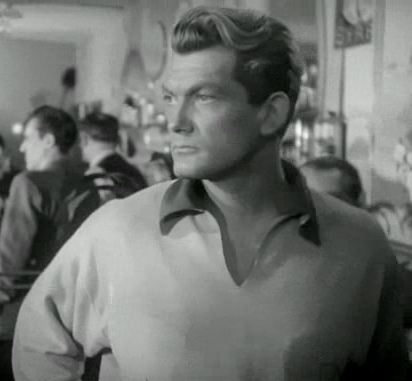
The water forms a mirror as Orpheus (Jean Marais) awakes after his first encounter with his ‘Death’

The BFI has released a restored version of Jean Cocteau’s Orphée as part of their November ‘Fantastique: The Dream Worlds of French Cinema‘ season at BFI Southbank. The new print has been restored by CNC in France and looks good with crisp black & white cinematography from Nicholas Hayer. John Cocteau was a unique figure in French art culture and his limited number of films over a 35 year career from the 1920s are unlike anything else in French cinema. The Sight & Sound article by Virginie Sélavy in the November 2018 issue places Cocteau in context in its exploration of the fantastique in French cinema. He wasn’t part of any movement as such but the tradition of the fantastique – the uncanny in realistic situations – is very strong in French…

View original post 830 more words


Vivir es sentir todas las edades sin amargura hasta que llega la muerte.

To live is to feel all ages without bitterness until death comes.


María Casares
Actriz francesa

eG26DE4KIug

OM681Ef6ybU

Gabrilu's avatarNonSoloProust

Jean Marais Orphée Jean Cocteau
Orfeo (Jean Marais)

Inizio del film, voce fuori campo di Cocteau:

“La leggenda di Orfeo ben conosciuta. Nella mitologia greca, Orfeo era un cantore della Tracia. Il suo canto affascinava anche gli animali ma lo distraeva dalla moglie Euridice. La Morte gliela tolse. Lui discese agli Inferi ed us il suo canto per ottenere di ricondurre Euridice nel mondo dei vivi. A condizione di non guardarla. Ma lui la guard e venne fatto a pezzi dalle Baccanti.
Dove si svolge la nostra storia, ed in quale epoca? E’ privilegio della leggenda essere senza tempo.
Fate come volete. Interpretate come volete…”

Ecco come lui, Cocteau, interpreta questa leggenda nel suo film.

Parigi, anni cinquanta. Durante una rissa al Caf des Potes, luogo di raduno di giovani artisti e scrittori, il celebre poeta Orfeo (Jean Marais) assiste ad un incidente nel corso del quale il diciottenne poeta Cgest (Edouard Dhermitte) muore, investito…

View original post 1,621 more words

Louise Sanfaçon's avatarMon musée imaginaire

Leonor Fini & Maria Casares Leonor Fini & Maria Casares

Leonor Fini & Maria Casares Leonor Fini & Maria Casares

Leonor Fini & Maria Casares Leonor Fini & Maria Casares

© Leonor Fini © Leonor Fini

Leonor en train de peindreLeonor Fini est considérée comme l’une des plus importantes femmes artistes du milieu du XXe siècle, avec Leonora Carrington, Frida Kahlo, Meret Oppenheim, Remedios Varo et Dorothea Tanning – que Fini connaissait bien, pour la plupart. Sa carrière, qui a duré près de six décennies, inclut la peinture, le graphisme, l’illustration de livre, le design (la célèbre bouteille de parfum en forme de torse pour «Shocking» de Schiaparelli), des décors et des costumes pour le théâtre, le ballet, l’opéra et le cinéma. C’est dans ce milieu des arts de la scène qu’elle rencontra la tragédienne Maria Casares, dont elle fit le portrait en 1955.

Leonor Fini is considered one of the most important women artists of the mid-twentieth century, along with Leonora Carrington, Frida Kahlo, Meret Oppenheim, Remedios Varo, and Dorothea…

View original post 65 more words

“I would really like to experience death as a path and have the full ability to travel through it conscientiously”.

Maria Casares

elsimagico's avatarEl sí mágico


  casares

Publicado en “Primer Acto”, Nº 267 (Enero-Febrero 1997)


“Me gustaría mucho que la muerte se mepresentase como una senda y tener la plena posibilidad de viajar por ella con toda conciencia”

María Casares.


“Nunca han sido tan claramente reconocidos los servicios que recíprocamente pueden rendirse la escena y la pantalla. Y debemos felicitarnos de encontrar en el origen de este reconocimiento a María Casares, es decir, a la joven comediante que posee seguramente todo lo que es necesario para ser mañana la gran estrella del cine, como también del teatro francés” (1).

Con estas palabras terminaba René Jeanne un elogioso artículo, traducido al castellano en 1954 para la revista Teatro, sobre la trayectoria profesional, a caballo entre el cine y la escena, de la joven y, ya por aquel entonces, respetada actriz, María Casares. El motivo era la aparición el año anterior en Paris de…

View original post 7,030 more words

I’ve looked up at the big screen time and time again and I haven’t seen anyone more astonishingly, jaw-droppingly  beautiful as Maria Casares. Her beauty transcended age for when she was in her 70s she looked utterly unforgettable. An ethereal presence from the chamber of dreams.

Paul Page

Design a site like this with WordPress.com
Get started